

I’ve done a couple reviews at Last Rites since posting here last. First up is the self-titled debut of lovingly hellish devotional black metal from Norway’s Diabolus, Mecum Semperterne!, which “is orthodox in its hunger, omnivorous in its methods, and ferociously satisfying from all angles.” Read about it here. I also reviewed the excellent first album from an Italian stoner metal/desert rock group called Desert Collider: “The signposts are all there, of course – the ones that point to Kyuss and Lowrider and Dozer and Monster Magnet and Sleep. But while Desert Collider’s command of genre signifiers is complete and immaculate, rather than spin their wheels through a perfunctory exercise in mere form, these eight songs quiver and roar with the captive heat of stones left to bake in the sun.” Check out the full review here, and I apologize in advance for all the etymology I crammed in there.
I recently read Don DeLillo’s second novel, End Zone. His books White Noise and especially Underworld have long been favorites of mine, but I had never dipped into his very early work. If you were in graduate school, you almost certainly might write a paper about it called something like “Football and/as Nuclear War,” but despite the themes, it is also frequently hilarious. Compared to his later work, End Zone is more obviously indebted to Joseph Heller and Kurt Vonnegut, but the stark poetry of his imagery (particularly successful at evoking the lunar desolation of his fictitious version of West Texas) and the apocalyptic banality of his America were both already well-formed.
A particularly grotesque passage late in the book stuck with me, when the book’s protagonist asks one of his professors, Alan Zapalac, “about what scares you. Where the true danger is.” Zapalac replies: “Let me just simply mention flag-waving and the insane repetitive ritualizing that goes on every time a flag is hiked up a pole… or some simple sports event where you look up suddenly and there’s sixteen thousand Shriners and Masons with their comical Turkish hats and they’re covering every inch of the playing field with, in the middle of them all, three hundred and eighty-five high school girls dressed in red, white and blue who are prostrating themselves on the cold earth as they assume the shape of an American flag being dragged through yak dung by syphilitic foreign students and off to the side there’s some crippled television personality in a wheelchair and pulleys singing the national anthem as the cystic fibrosis child of the month poses in the nude for the cover of Life. I tend to worry about such spectacles” (DeLillo, 1972, pp. 164-165).
Why would such a thing be on my mind? Oh, I guess no reason. How about some music?
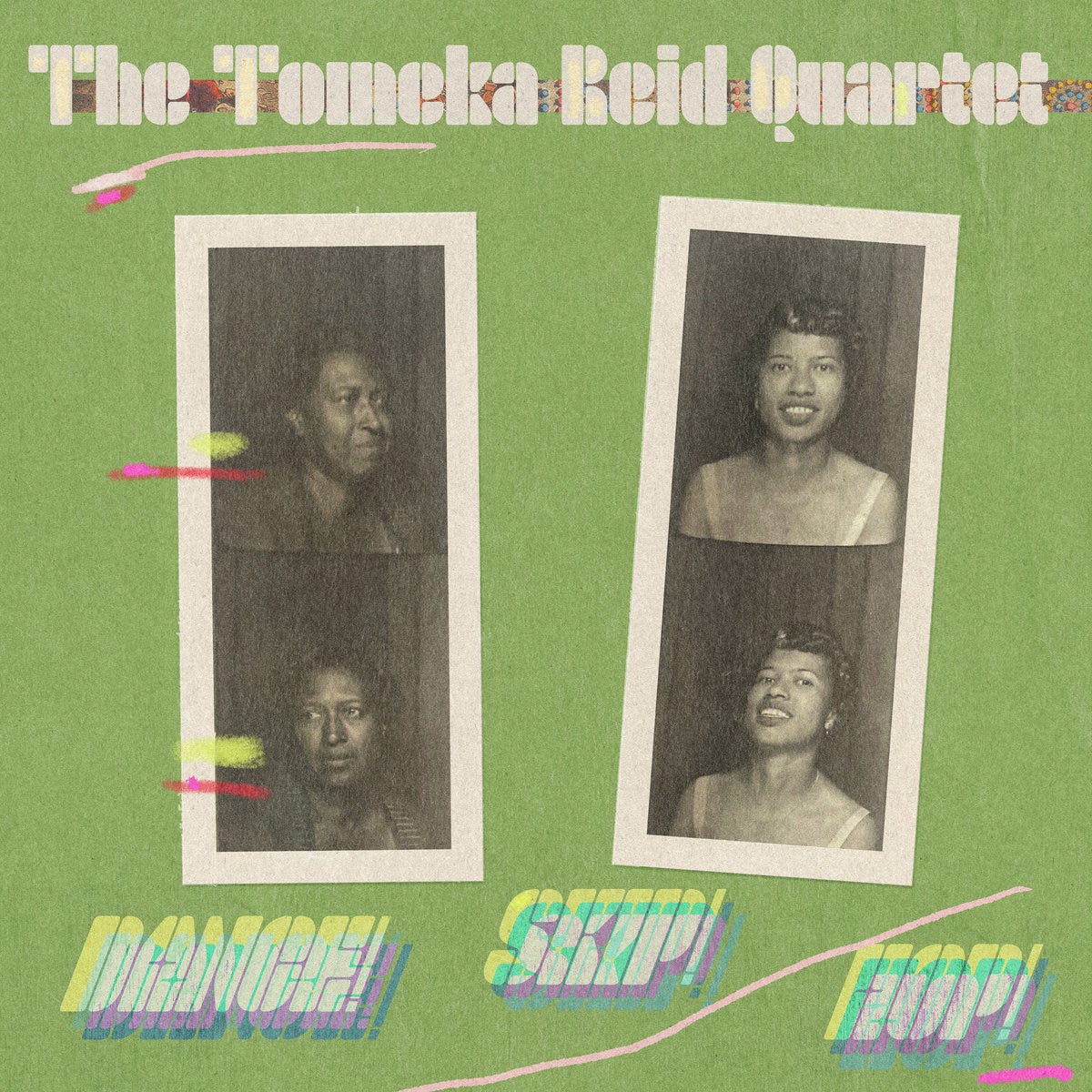
Tomeka Reid Quartet - Dance! Skip! Hop! (out now on Out of Your Head Records)
Dance! Skip! Hop! is cellist Tomeka Reid’s fourth album leading her outstanding quartet with Mary Halvorson on guitar, Jason Roebke on bass, and Tomas Fujiwara on drums. If the album title didn’t give it away, this is an exercise in joy, lightness, and bodies in motion. Across these five compositions from Reid, there’s a feeling of warmth and codetermination. With no horns or other front-line instrumentation, the dense tangle of strings from cello, bass, and guitar feels like a blur of legs on a joyfully crowded dancefloor, and just like that kind of visual bustle, it’s often difficult - not to mention unnecessary - to tell who’s who.
Fujiwara’s drumming on “a(ways) for CC and CeCe” is supple and funky, teasing out half-time elaborations of the main rhythmic theme with sly ride cymbal and snare rim hits. “Under the Aurora Sky” is the album’s most languid piece, but in its fizz and gradual dissipation, it sounds like the ghost of a ballroom dance, with Reid’s patient, lyrical bowing coming to the fore. “Oo Long!” is funky, sprightly, and eventually opens up into a beautifully distorted squall of a solo from Halvorson, in which she comes as close as I’ve ever heard her sound to Norway’s Hedvig Mollestad. Best of all, though, is the album’s opening title track, which centers around a bouncy, jauntily descending melodic theme that is shared so tightly between the three string players that it starts to feel like a single sinew, tensing and flexing with perfect agility. Reid and Halvorson take the first two solos, but then towards the song’s final third, the band briefly lands in an open space of free improvisation before resolving back into the theme. This is an easy early contender for best jazz album of the year, but more than that, it’s simply exhilarating.
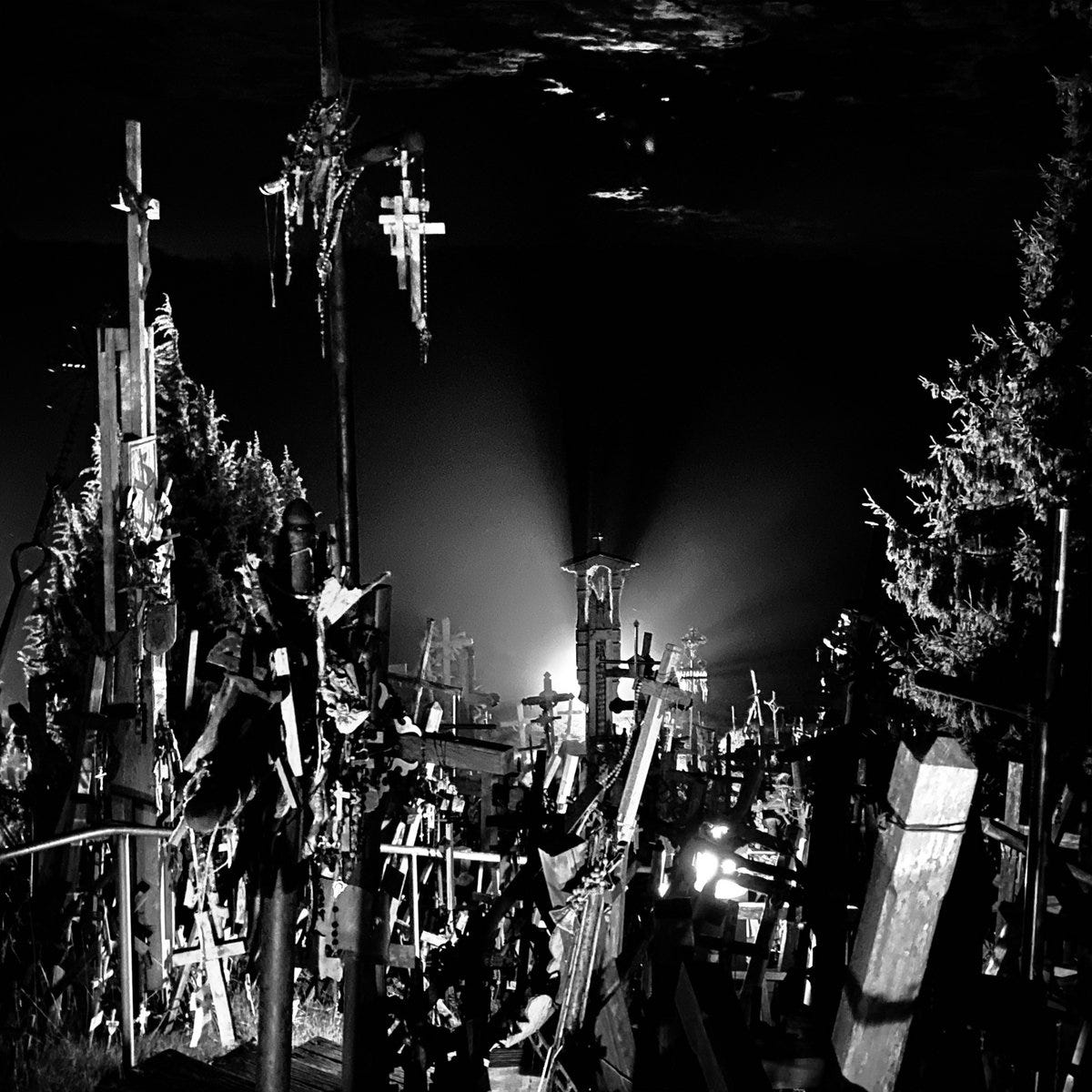
Gyldensterna - Solange Noch Zeit Ist (out now; self-released via Bandcamp)
I know essentially nothing about Gyldensterna. Their(?) Bandcamp page claims German provenance, Metal-Archives suggests German and Estonian membership, and the lyrics sound like they are mostly sung in English. That biographical paucity makes it even easier to focus solely on this effectively single-minded, thirty-five minute debut album. The style is, I suppose, closest to depressive black metal, but calling it that will almost certainly give you the wrong impression. Each of these songs is a slow, hypnotic, and richly textured exercise in what feels at times like ritual melancholy, built around utterly simplistic blackened guitar arpeggios and drumming like sedimentary rock. Best yet is the massive, shoegaze-inspired tonal focus, which gives songs like “Slahte” and “Seucheschif” a beautiful low-end heft that sounds like someone passing out on the bass end of a pipe organ’s foot pedals.
In truth, there’s nothing whatsoever aggressive about Solange Noch Zeit Ist; rather, the mood is intensely dark and somber, but never quite ponderous. The closer “C.O.A.” is synth-focused and almost darkwave, but elsewhere the blend of influences lands Gyldensterna somewhere in the general vicinity of early Menace Ruine, the Ruins of Beverast, Lotus Thief, Nortt, or perhaps SubRosa. Deeply beautiful bleakness that works especially well for those times when you just want to suspend your mind in a state of textured, beckoning emptiness.

Masayo Koketsu & Nava Dunkelman - Veins of Rain (out now via Relative Pitch Records)
Veins of Rain represents the first meeting (as in, first meeting ever, both as people and as recording partners) of alto saxophonist Masayo Koketsu and percussionist Nava Dunkelman. It’s a deep, richly textured album that particularly rewards close listening for the astonishing variety of percussive instrumentation and tones from Dunkelman, including chimes, bowed cymbals, wooden blocks, and all sorts of difficult-to-identify micro-tuned percussion elements. Koketsu often favors short, almost epigraphic lines that sit mostly in a space of hushed, yearning restraint, as on the beautifully pensive “Tsuki No Shizuku,” but she makes excellent use of extended techniques like tapping and hard-tongued breath-stop flutters, as well as raw-edged free wailing. The nervy, anarchic “Kotodama” is one of the best examples of this range.
As one would hope for in this kind of duo setting, the interplay between Koketsu and Dunkelman is what makes this album a consistently thrilling experience. Listen halfway through the album closer, for example, as Dunkelman rolls in a low storm of what sounds like timpani or very low tom-toms and a gong, atop which Koketsu crests and cries. Or listen to “Tsuyu No Tama,” which sounds like an entire museum’s worth of miniature puzzle boxes. Or, better yet, just sink into the nearest chair and listen to the full 45-minute stretch as you might listen to the spring song of two birds, full with gratitude that the long night of winter now sleeps.
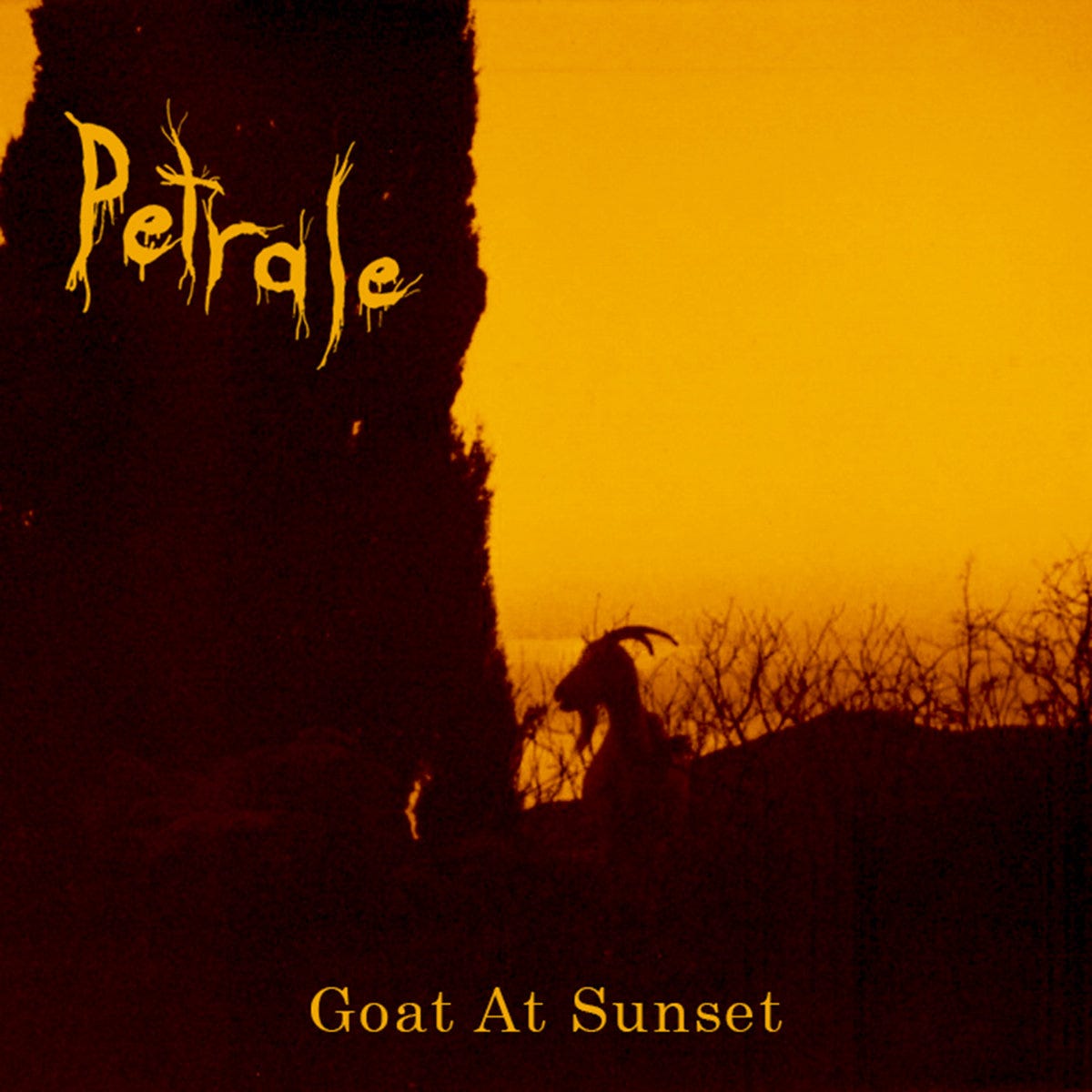
Petrale - Goat at Sunset (out now; self-released via Bandcamp)
I first came across the black metal of Croatia’s Petrale with 2023’s Salvation Precipitates. Somewhat anomalously for one-person projects, Petrale offers a fully-formed, idiosyncratic style (this is somewhat unusual) with zero extraneous bullshit (this is very unusual). Goat at Sunset, like previous Petrale albums, is truly a 100% in-house affair, with Petrale’s sole member handling all drums, guitars, bass, vocals, compositions (with the exception of a single co-writing credit on the album opener), lyrics, recording, mixing, and mastering. The songs are generally stern and dour, but the guitar riffs twist off in surprisingly melodic and harmonic directions. The easiest point of comparison might be if you combined the primitivism of prime Darkthrone, the early work of Eastern European black metal progenitors in Root and Master’s Hammer, and the disconsolate swerve of Norway’s avant-garde acts Ved Buens Ende (and its successor band, Virus).
And yet, those comparisons don’t cover the bouncy, sometimes disco-driving bass or the truly danceable drum beats that Petrale weaves in amidst the grumbling, blasting, and sharp-edged tremolo. The tremendous “Dorsal Horn,” for example, pulls way back into a drum solo and playfully twanged bass and guitar hits before closing out with a surging intensity that feels like one of the climaxes of Aluk Todolo’s Voix. Wildest of all, though, is how Petrale closes this massively satisfying album with a shockingly successful cover of “L’Esperanza,” an early trance/chill-out song from Sven Väth’s 1992 debut album Accident in Paradise. Honestly, it works, and the fact that it works so well underscores how inventive and fiercely independent Petrale is. And if nothing else, kindly rest contented at having encountered one of the year’s most “yes, this is doing exactly what it said it would do” pieces of cover artwork.
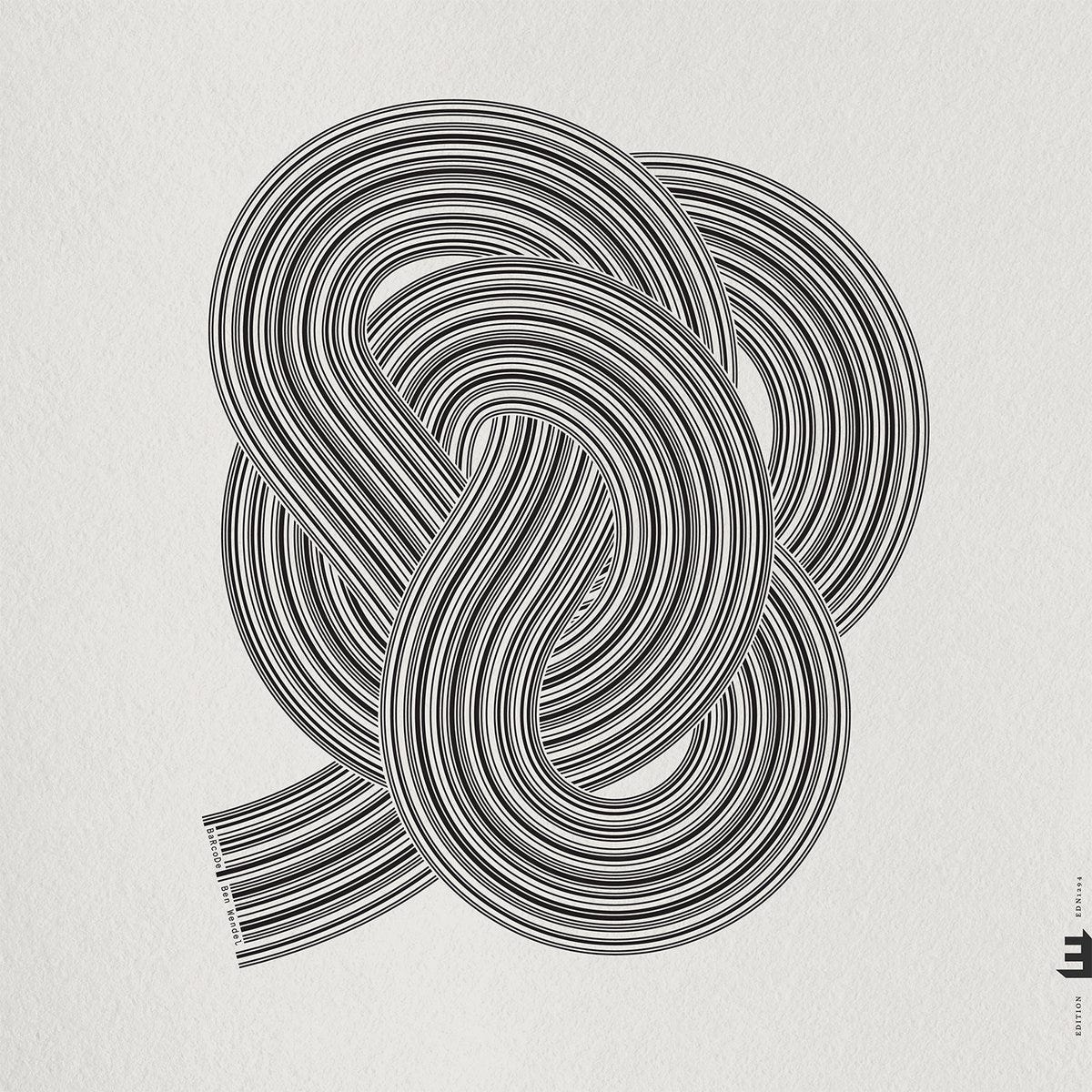
Ben Wendel - BaRcODe (will be released 3/13 on Edition Records)
If the saxophonist Ben Wendel’s new album BaRcODe can be said to be defined by anything, it would be through its pulsating energy. The unusual instrumentation of this quintet session is responsible for much of that, of course, because Wendel’s tenor sax is joined by four different vibraphonists/percussionists: Patricia Brennan, Simon Moullier, Joel Ross, and Juan Diego Villalobos. Several of the mallet players also use various effects pedals and electronic treatments, and Villalobos often contributes slightly more traditional percussion, which leads to a much more diverse palette of sounds than just “four vibes” might suggest. Sometimes, though, it’s precisely the tightness and timbral closeness of the instruments that provides such an electric spark. On the album opener “Clouds,” for example, it’s easy to envision a triple frontline of vibraphones in overlapping clockwork like some kind of Kraftwerk vision of the Philip Glass Ensemble, and Wendel’s dizzy, darting melody races out from the percussive bedrock like a young rabbit startled from the underbrush.
“Repeat After Me,” by contrast, starts off with a sassy, single-note negotiation of rhythm before it stretches out in a loping, half-time breakbeat. The album’s most lyrical, reverb-drenched song is “Olha Maria” (originally a Antônio Carlos Jobim song called “Amparo” from 1970’s Stone Flower, but then given lyrics as “Olha Maria” on a 1971 Chico Buarque album), trading the bossa nova guitars for vibraphone arpeggios and a notably lounge-noir tone from Wendel. The best piece on the album, though, might be “Mimo,” which begins with patiently blocky deconstructed chords from the vibes that sound a little like Japanese gagaku music, but eventually Wendel’s snaking sax lead and Villalobos’s insistent drum pulse open out into the song’s latter half that mostly finds the different vibe players trading fours, twos, and eventually just jumping all over each other out of pure, riotous happiness. Friends, that’s one hell of a fine place to be these days, even if it’s just to visit.